Why One Boiler Can Shut Down Your Whole Home
When one boiler powers radiant heat, forced air, and hot water, a single problem can shut your whole home down. Learn why and what you can safely check first.
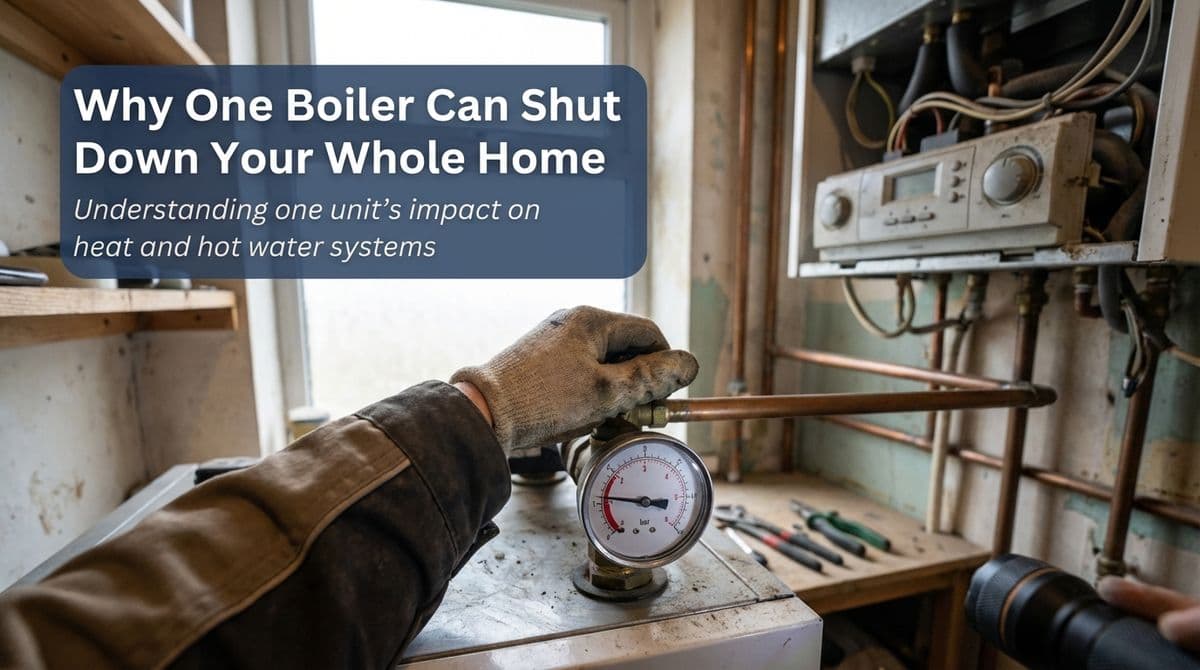
When One Boiler Brings a Home to a Halt
We recently got a call from a customer — let’s call him Mark — who was clearly stressed. His Triangle Tube boiler had shut down, and with it went everything: the radiant floor heat, the forced-air heat, and the domestic hot water. The house was cold, the showers were cold, and nothing seemed to respond at the thermostat.
On the phone, Mark said something we hear a lot with these systems: “We have a boiler that does radiant, forced air, and hot water — and nothing is working, so it must all be the boiler.” He was exactly right that the boiler was at the heart of the issue. When you have one unit doing three jobs, a problem with that one unit can feel like your entire home has shut down.
How One Boiler Can Power Your Whole Home
Systems like Mark’s are sometimes called combination hydronic systems. Instead of separate equipment for each task, one boiler heats water that’s shared by several parts of the house:
- Radiant heat – Warm water flows through tubing in the floors or in baseboards to heat rooms quietly and evenly.
- Forced-air heat – The boiler sends hot water to a small coil inside an air handler; a blower pushes air over that coil and through your ducts.
- Domestic hot water – The boiler either directly heats the water you use at faucets and showers or heats an indirect water heater tank.
All three of those can depend on the same burner, heat exchanger, and safety controls. So when the boiler itself shuts down, it can feel like your home just lost three different systems at once — even though it’s really one central system going offline.
Why a Boiler-Based System All Goes Down at Once
When we hear a story like Mark’s — no heat from radiant, no warm air from the vents, no hot water at the taps — we immediately suspect that the core boiler has shut itself off. Modern boilers are designed with layers of safety and control. If something seems unsafe or out of range, they lock out to protect your home.
Here are some of the most common reasons we see a whole-home boiler system shut down:
- No power – A tripped breaker, a switched-off service switch near the boiler, or a loose connection can stop everything.
- Gas supply problems – A closed gas valve, gas utility issue, or low gas pressure can keep the burner from lighting.
- Low water or pressure – Hydronic systems need the right amount of water and pressure. If it drops too low, the boiler’s safety controls shut it down.
- Overheating or venting issues – Blocked flues, bad fans, or overheating can trigger high-limit or safety sensors.
- Failed components – Igniters, circulator pumps, control boards, or sensors can fail and put the boiler into lockout.
In Mark’s case, the fact that every part of the system was offline told us we were dealing with a boiler-level problem, not just a stuck zone valve or a single air handler issue.
Boiler vs. Zones: How to Tell What’s Really Wrong
One helpful way to think about these systems is to separate the boiler from the distribution:
- The boiler is the heat source — it heats the water.
- The zones (radiant loops, air handler coils, and hot water side) are where that heat is distributed.
When only one part of the house is cold — say one room has no radiant heat, but everything else is fine — we often find:
- a stuck or failed zone valve,
- a problem with a thermostat, or
- air trapped in just one loop of piping.
When everything is out, like in Mark’s situation, the problem is usually at the boiler itself or with its power, gas, or safety controls. The details of what you lose tell us a lot about where to start looking.
Simple Checks Homeowners Can Safely Do
There are a few basic things we often walk homeowners through over the phone before we even roll a truck. If you’re comfortable and it feels safe, you can try these:
- Check power
- Look for a light switch near the boiler that might control it; make sure it’s in the ON position.
- Check the electrical panel for a tripped breaker for the boiler or mechanical room.
- Look at the boiler’s display
- Modern units like Triangle Tube usually show an error code or flashing light if they’re in lockout.
- Make a note of any numbers or letters; that helps us diagnose faster when we arrive.
- Verify gas valves are open (only if you know where they are and can see them clearly)
- The handle should be in line with the pipe, not across it.
If you smell gas, hear hissing, or feel unsure about anything you see, step away from the system and call a professional right away. Safety comes first; do not try to take the boiler apart yourself.
When to Call a Boiler Professional
With systems that tie together radiant, forced air, and domestic hot water, we recommend bringing in someone who regularly works on hydronic and boiler systems, not just standard furnaces. Even if we haven’t worked on your exact brand before, a qualified boiler technician understands:
- how the controls interlock between space heating and hot water,
- how to read and interpret boiler error codes,
- how to test safeties, sensors, and pumps, and
- how to safely return the system to service without bypassing protections.
When we arrived at Mark’s home, we used those same steps: confirm power and gas, review error codes, test the circulators and safety devices, and then repair the root cause so all parts of his system could come back online together.
Keeping Your Combo Boiler System Reliable
Because one boiler is doing so much work, a little preventive care goes a long way. We generally recommend:
- Annual boiler maintenance to clean the burner, check combustion, and test safeties.
- Checking system pressure and expansion tank health, especially before heating season.
- Flushing or servicing radiant and hot water circuits as recommended by the manufacturer.
- Addressing small issues early — odd noises, new error codes, or intermittent hot water are all reasons to call before a full shutdown.
If your home is set up like Mark’s — one boiler providing radiant heat, forced air, and domestic hot water — and everything suddenly stops, there’s a good chance the boiler is sending you a message. We’re here to help you understand that message, get your system running safely again, and keep your home comfortable in every season.