Why Your Water Heater Fails So Early
Water heater failing early? Learn how sediment buildup, high temperatures, and basic maintenance affect lifespan—and what you can do to prevent leaks.
Why Water Heaters Fail So Early (And What We See On Calls)
We recently got a call from a customer — let’s call him Mike — about a water heater we had just installed a few days earlier. It was already leaking and his hot water was coming and going. Naturally, his first question was, “Why do these things go out so quickly?”
On that same day, we were also heading to another home where the water heater was giving intermittent hot water — sometimes it worked, sometimes it didn’t. In talking it through, the homeowner said exactly what we often suspect: “I think we’re not maintaining them right… we’re probably not emptying them out, and we might be running them too hot.”
He was right on both counts — and those are two of the main reasons we see water heaters fail long before their time.
How Sediment Buildup Wears Out Your Water Heater
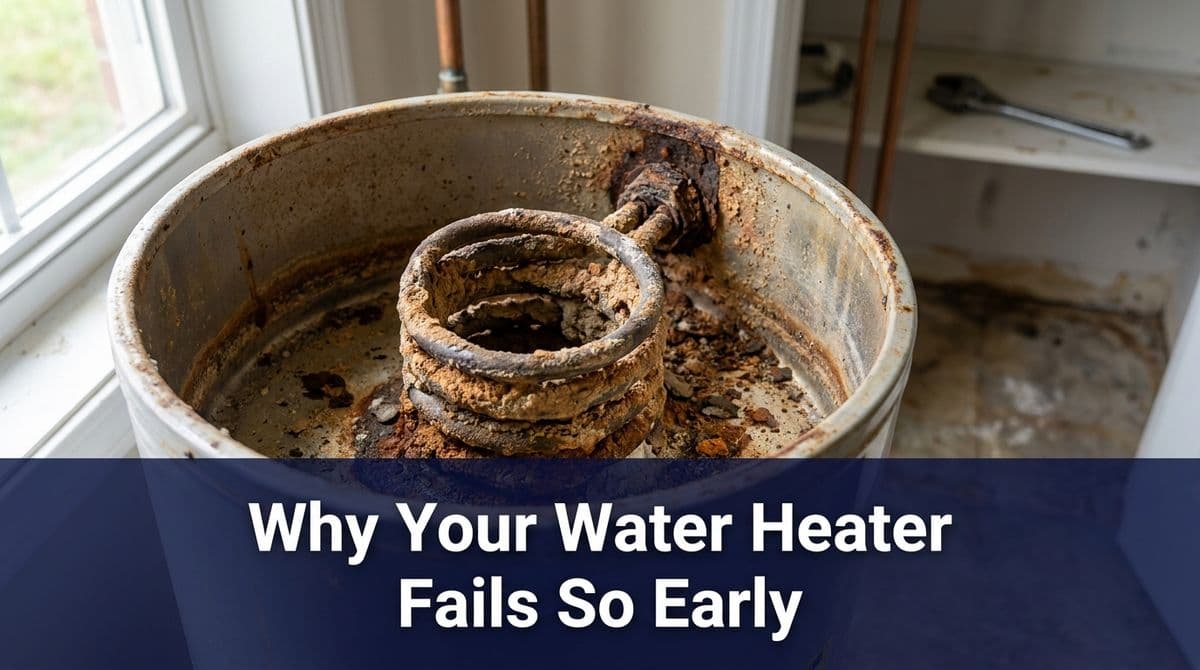
Every water heater we inspect tells a story. When we drain one and see buckets of sand-like grit coming out, we know the ending of that story: early failure.
That “sand” is sediment — minerals and debris that settle at the bottom of your tank over time. The harder your water, the faster this buildup happens.
What Sediment Actually Does Inside the Tank
Here’s what we often find when a heater dies young:
- Burner overheating: On gas units, the burner is trying to heat water, but it’s really cooking a thick layer of sediment. This overheats the bottom of the tank.
- Hot spots and cracks: Overheating creates stress points on the metal tank, which can lead to leaks far earlier than expected.
- Less hot water: Sediment takes up space, so your “50-gallon” tank starts behaving more like a 35–40 gallon tank.
- Noisy operation: Popping or rumbling sounds? That’s water trapped under sediment, flashing to steam and rattling the tank.
In Mike’s case, we were already working with a new unit, but on older heaters we replace, it’s common to see several inches of rock-hard buildup at the bottom.
Why Running the Water Heater Too Hot Is a Problem
During our call, Mike said what we hear from a lot of homeowners: “Maybe we’re running them too hot.” That’s a big one. Cranking the temperature up feels like an easy fix for lukewarm showers, but it comes with trade-offs.
High Temperatures Shorten Lifespan
Running your water heater much above 120°F can:
- Accelerate corrosion: Hotter water is harder on the tank’s lining and anode rod.
- Increase pressure: Higher temperature = higher pressure = more stress on joints and valves.
- Raise scald risk: Water above 130°F can cause burns in seconds, especially for kids or older adults.
If you’re constantly turning the dial up because the water seems weak, it may be masking a different issue: sediment buildup, a failing thermostat, or an undersized unit.
Basic Water Heater Maintenance Every Homeowner Should Know
When we talked with Mike, he admitted, “I don’t think we’re emptying them out.” That’s more common than you’d think — most people never touch their water heater until it fails.
Here are the basic steps we recommend to help your heater last closer to its full life span.
1. Flush the Tank Annually (Or More Often for Hard Water)
A simple annual flush goes a long way toward controlling sediment. The basic process:
- Turn the thermostat to “pilot” (gas) or cut power (electric).
- Attach a hose to the drain valve at the bottom of the tank.
- Run the hose to a floor drain or outside where hot water won’t cause damage.
- Open the drain valve and let water run until it’s mostly clear.
If you’re not comfortable doing this, we’re happy to handle it during a routine maintenance visit — and we’ll also check for other developing issues.
2. Keep the Temperature in the Safe Zone
We usually recommend setting the thermostat to about 120°F. That’s a good balance of comfort, efficiency, and safety. If you don’t see numbers on the dial, start in the middle setting and adjust slightly if needed.
If you need to crank it way up just to get a decent shower, something’s wrong — and turning it hotter will only shorten the heater’s life. That’s a good time to give us a call so we can diagnose the root cause.
3. Watch for Early Warning Signs
Mike first noticed intermittent hot water, then a small leak. Those are both warning flags. Call a pro if you notice:
- Hot water that comes and goes
- Water pooling under or around the tank
- New rumbling, popping, or banging sounds
- Rusty water from hot taps
Sometimes we can repair or adjust the heater; other times, replacing it under warranty (like we tried to do by checking the model and install date) is the smarter move.
Want Your Water Heater to Last Longer?
Most water heaters don’t just “die” out of nowhere — they’re slowly worn down by sediment, high temperatures, and lack of maintenance. By flushing the tank, keeping the temperature in check, and paying attention to early symptoms, you can add years to your system’s life.
If your water heater is leaking, giving you intermittent hot water, or you’re worried you’ve been running it too hot, we can take a look, check the warranty, and help you decide whether repair or replacement makes the most sense.